Thursday, November 10, 2011

Bollinger Mill Turbine Reservoir

Beneath the mill itself is one of the most unique spaces I have ever seen; instead of having a chute for the water to flow through, the water would simply fill up this reservoir, forcing water through the turbine.The whole space has an ethereal quality to it, and I can only imagine what it would have sounded like with the turbine spinning below the water. You can see the two long drive shafts sticking out of the water, still connected to the turbines.

Wednesday, November 9, 2011

Substructure and Water Intake, Bollinger Mill

Since the turbine was inside of the mill in the subbasement, water traveled into the mill via a large intake hole above the dam.The screen, which would be cleaned periodically, trapped debris and twigs from entering the mill and clogging the turbines.The water would then travel through the turbine and out through the hole at the base of the mill, below the dam.The other holes were either for light, or for water overflow.

Tuesday, November 8, 2011

Bollinger Mill, Interior

While many have an a romantic image of a giant waterwheel turning on the side of a rustic rural mill, in reality most mills had converted over to steel turbines by the turn of the 20th Century.While Bollinger Mill no longer operates, you can still see the various machines, gears and other accoutrements that transformed water power into machine power.The massive timbers holding up the building are impressive in their own right.Throughout the mill are various signs that were hand painted by the operators; the spelling sometimes can be interesting.

Monday, November 7, 2011

Bollinger Mill, Burfordsville

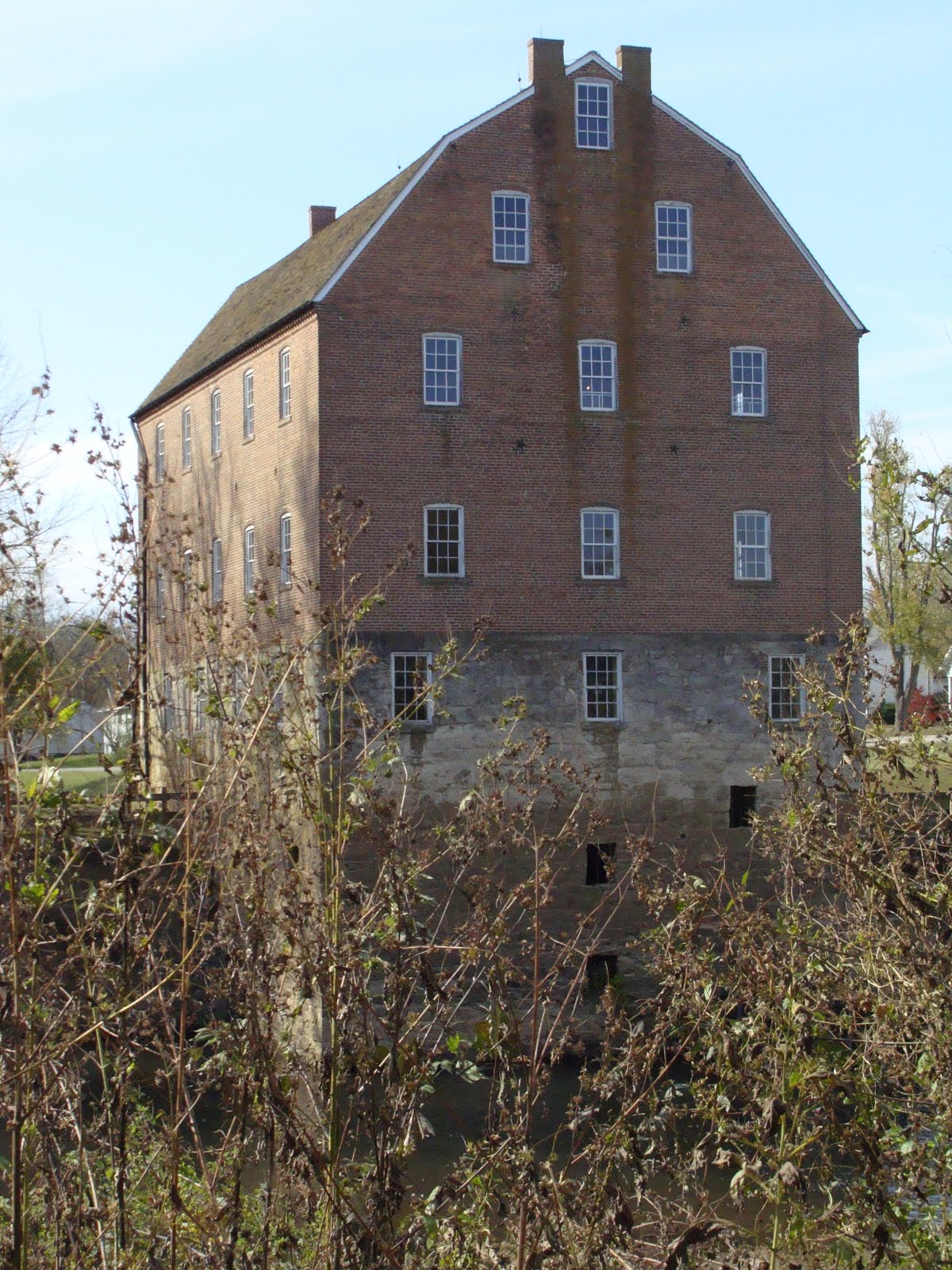
This week we'll be looking at the stunning Bollinger Mill in Burfordsville, Missouri. It is accompanied by one of Missouri's last covered bridges.The mill is a massive structure, and is probably one of the largest in rural Missouri; the stone portion is older than the brick structure above.The weeds had gotten awfully high, and it was somewhat difficult to take pictures of the mill with the bridge.What is truly wonderful is the continuing rural setting of the mill; stretching out from the mill is nothing by a small town on one side and pasture and fields on the other side of the river.

Saturday, November 5, 2011

Cape County Courthouse, Jackson

This courthouse is weird; I've never seen a neoclassical portal with the entrance below the columns. I think this building was renovated at one point at the front door was lowered below its original location.

Friday, November 4, 2011

Randolph County Courthouse, Chester, Illinois

I wonder if these two stones are what's left of the old Randolph County Courthouse. What's there now is clearly from the 1960's or 70's, and is a strong candidate for a Bad Mansard.

Thursday, November 3, 2011

Chester, Illinois

Chester, Illinois is sited on a bluff high above the Mississippi River, with two long valleys on either side of the downtown, built along the ridge line.Buildings sit right on the edge of the bluff, such as this church.I am amazed at how close the church is to the edge of the hill.I was surprised at how little development there was around the courthouse, which apparently was demolished for a 1970's modern building.Below is a building from the 1850's, presumable one of the oldest buildings in the town.The jail below is a remarkable little structure that has a castle-like look to it.
The downtown was quiet on Sunday afternoon, but the buildings are relatively intact, if a bit worn.

Wednesday, November 2, 2011

Cherokee Street Details

Every time I'm down on Cherokee Street, I notice something new, whether it's been there for one hundred years, or one month.

Tuesday, November 1, 2011

North Broadway, Revisited

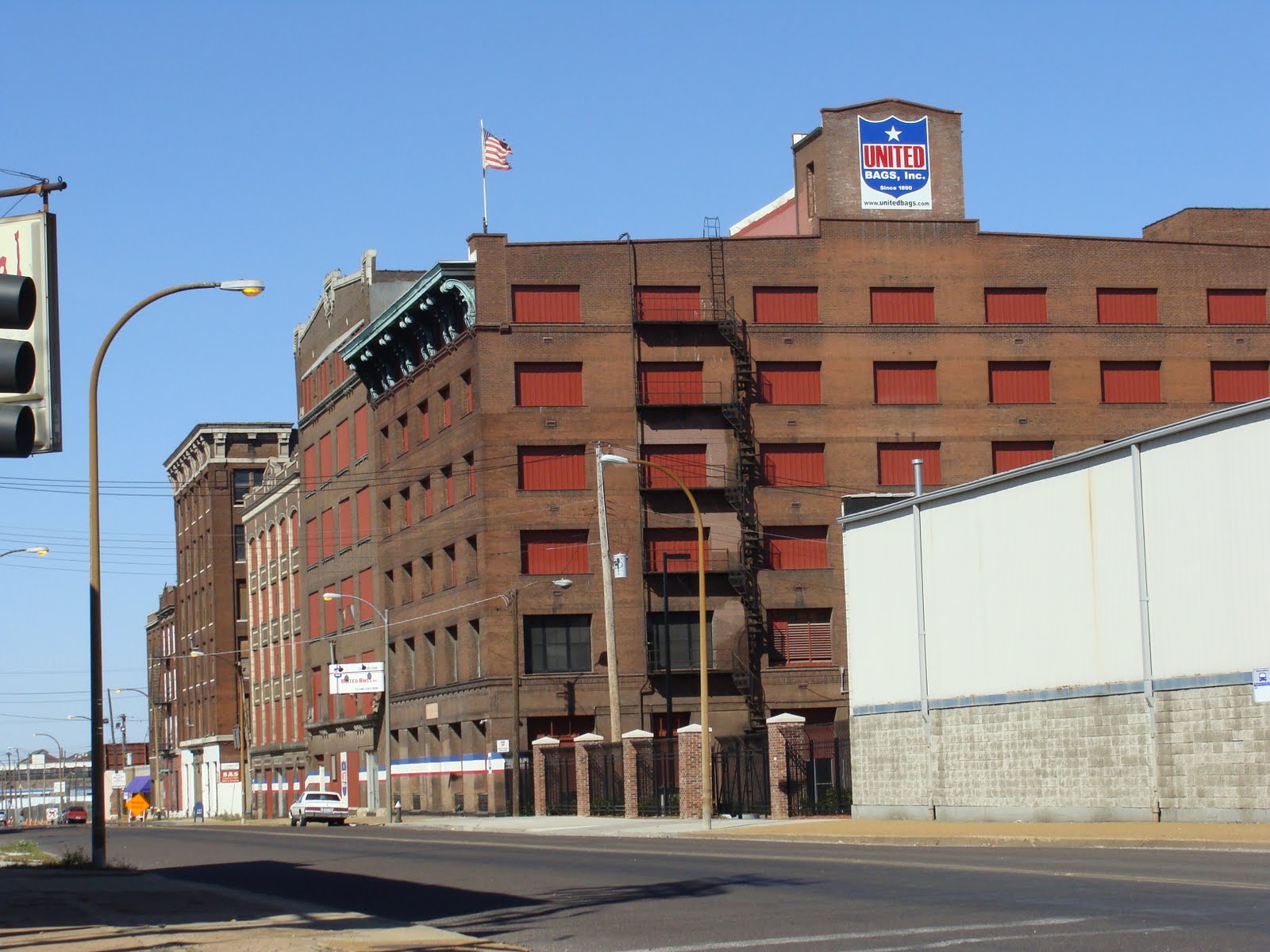
As the new Mississippi River Bridge slowly rises north of downtown, it will be interesting to see what happens to the largely desolate stretch of North Broadway that now runs under the approaches to the bridge.Many of the old refrigerated warehouses are vast, allowing for relatively easy refurbishment for new uses.The American Bag Company is one business that has occupied several buildings in a row.I find the peaked roof of this building amusing, as there is no roof behind the triangular facade.

Monday, October 31, 2011

Busch Stadium and the Architectural Legacy of St.. Louis

I was going to do this post about two years ago, but then I completely forgot. I thought to commemorate the Cardinals' eleventh World Series victory, I would look at the third Busch Stadium and how it borrows and celebrates earlier architectural monuments in St. Louis.First, and perhaps the most obvious, is the Eads Bridge, one of the most important bridges in the world; as you can see, the main entrances to Busch feature giant arches reminiscent of the bridge.See more of historic bridges here, from some of my earlier posts.Likewise, the ornamental terrcotta panels clearly show the influence of the Merchants Laclede Building on Fourth Street, once nicknamed the Wall Street of the Midwest.Look at more of St. Louis and other cities' historic office buildings here.Finally and perhaps the most obvious, the nearby Cupples Warehouses influence the overall composition of the stadium.I was remarking this weekend about how important the Cardinals are to St. Louis; in a metropolitan area where it is a spectator sport to try and watch the city fail, no one dares lay a hand on the one of the most storied teams in baseball. They can take away 500,000 people, but they can't take away the Cardinals.

A Blog detailing the beauty of St. Louis architecture and the buildup of residue-or character-that accumulates over the course of time.