Wednesday, May 9, 2012

Rarely Seen Views, St. Liborius

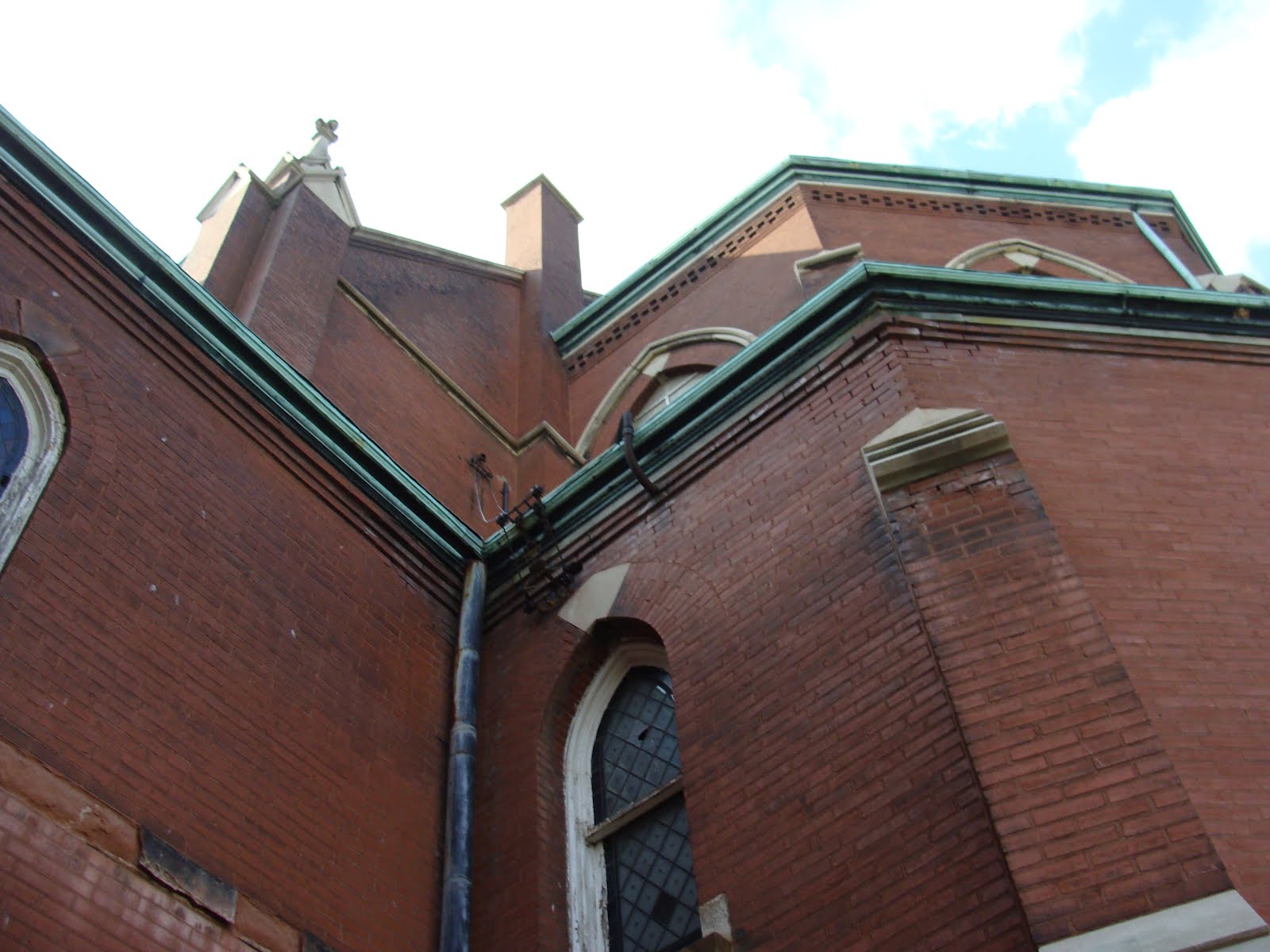
Perhaps as enjoyable as viewing the interior of the church was the chance to step into the private, intimate spaces behind the scenes of the church.
For example, the angles created by the exterior of the apse as it butted up against the bridge to the rectory, or the steps that descend down into the basement.
The building's stout walls will last for centuries, but the near future of the church will determine in what condition it will remain in the coming decades.
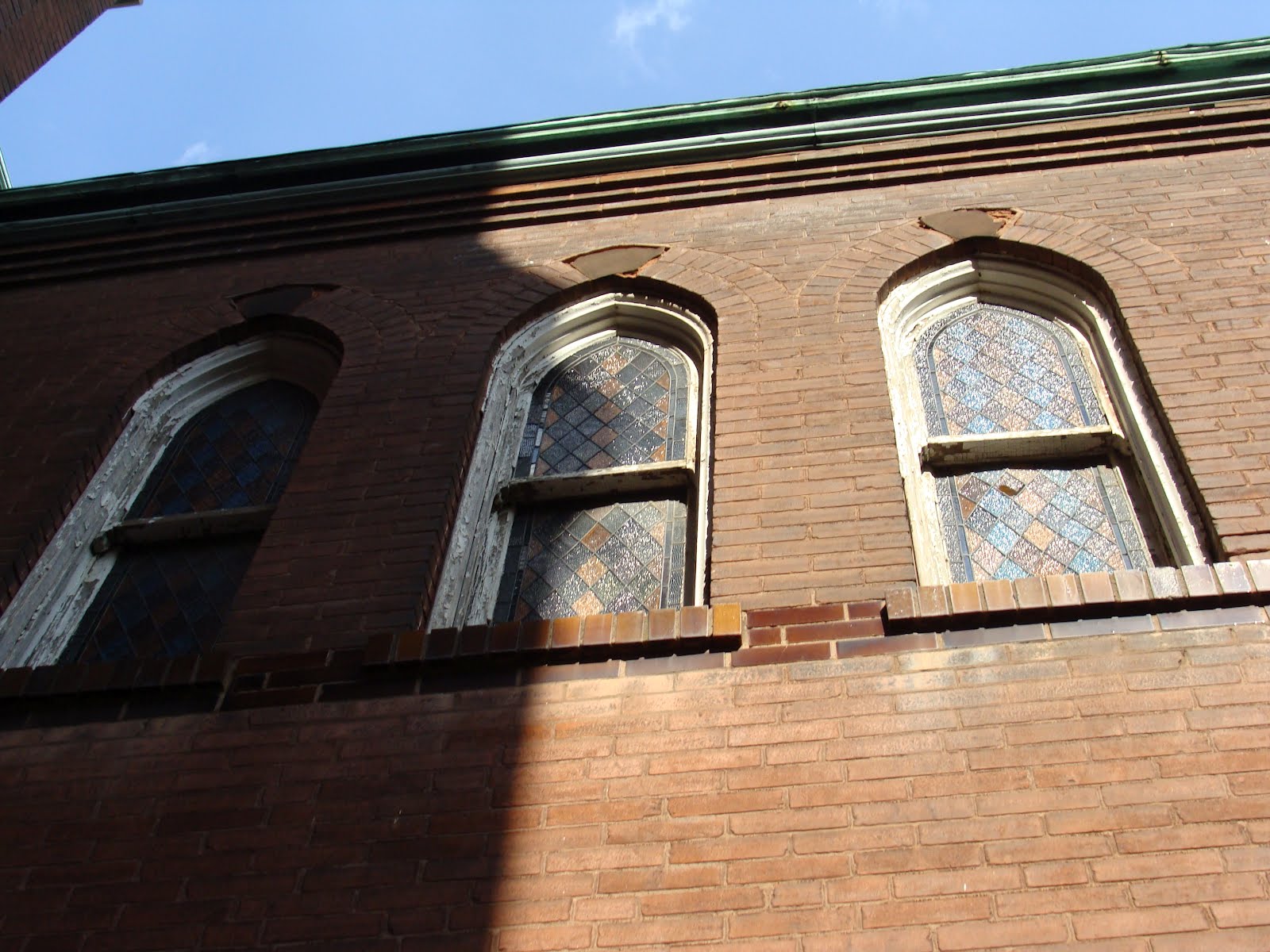
Below, the stained glass windows still line the hall of the bridge between the church and rectory, one of the most unique elements of this complex.
The rectory itself is a large building, with fascinating courses of glazed brick interspersed with the typical red brick.
The fuse box, no longer hooked up to electricity, is most likely part of the earliest wiring of the church.
A yellowed sign explains the operation of the system, though it is of no use now.
The parish hall, in the cellar, has been cut up into smaller rooms, but some of the original paint remains.
The grotto out back, facing away from the street, has miraculously avoided serious vandalism. This is the second historic church I have visited in North St. Louis in the last couple of months, and every time, I get a sad sense that I am witnessing the passing of an era. In fact, I get much of the same feeling viewing these churches as when I'm visiting ancient Roman ruins in Italy, even though those are obviously much older. What caused the Roman Catholic church to give up on this church? Was it a lack of will, or just a sad, realistic realization that there was no reason to keep the church open? Was it no different than when the Romans abandoned the Coliseum? Was there just simply no money or manpower left to keep it open any longer? Perhaps the most sad realization for me is that if even the beautiful St. Liborius can be abandoned and forgotten, then anywhere can, including the places I cherish.

Tuesday, May 8, 2012

The Fine Arts, St. Liborius

The most stunning aspect of the interior of St. Liborius are the massive painted lunettes above the arcades of the nave and transepts.
While most of the paintings were shrouded in darkness, I could pick out a couple of scenes at the beginning and end.
At the presumed beginning was the Nativity of Christ, and on the opposite place on the wall across the nave was the Resurrection, so I am going to guess that the rest of the paintings focus on the life of Christ.
I have no idea what the scene of a young Christ handing a cross to his parents is all about.
The stained glass is likewise beautiful, though some of the best pieces by Tiffany were sold decades ago and replaced with clear glass.
The high altar, described to me as originally being incredibly ornate and constructed of white marble, has been decimated. I don't know exactly when or why, but the high altar was stripped of most of its marble. What remains gives you a bit of a clue about how it once appeared.
The transept altars didn't fare much better, as this one attests, completely stripped of its marble veneer.


Monday, May 7, 2012

St. Liborius, A Desolate and Beautiful Interior

One of my favorite churches in North St. Louis, which I've looked at before here and here, is St. Liborius, anchoring the bend in North Market Street in the St. Louis Place neighborhood.
This weekend, the owners allowed visitors to come inside and view the interior, and brainstorm for possible uses for the massive, Gothic Revival church.
The church is a version of a German hallkirche, with relatively de-emphaisized transepts. All attention is therefore focused towards the high altar.
The massive compound Gothic columns hold up intricately detailed and well-preserved groin vaulting.
The choir loft is in bad condition, and the organ is largely gone.
The original gold leaf on the vaulting of the apse is well preserved and extremely beautiful.
Some of the original tracery and mosaic tile is preserved in patches around the church such as you can see here.
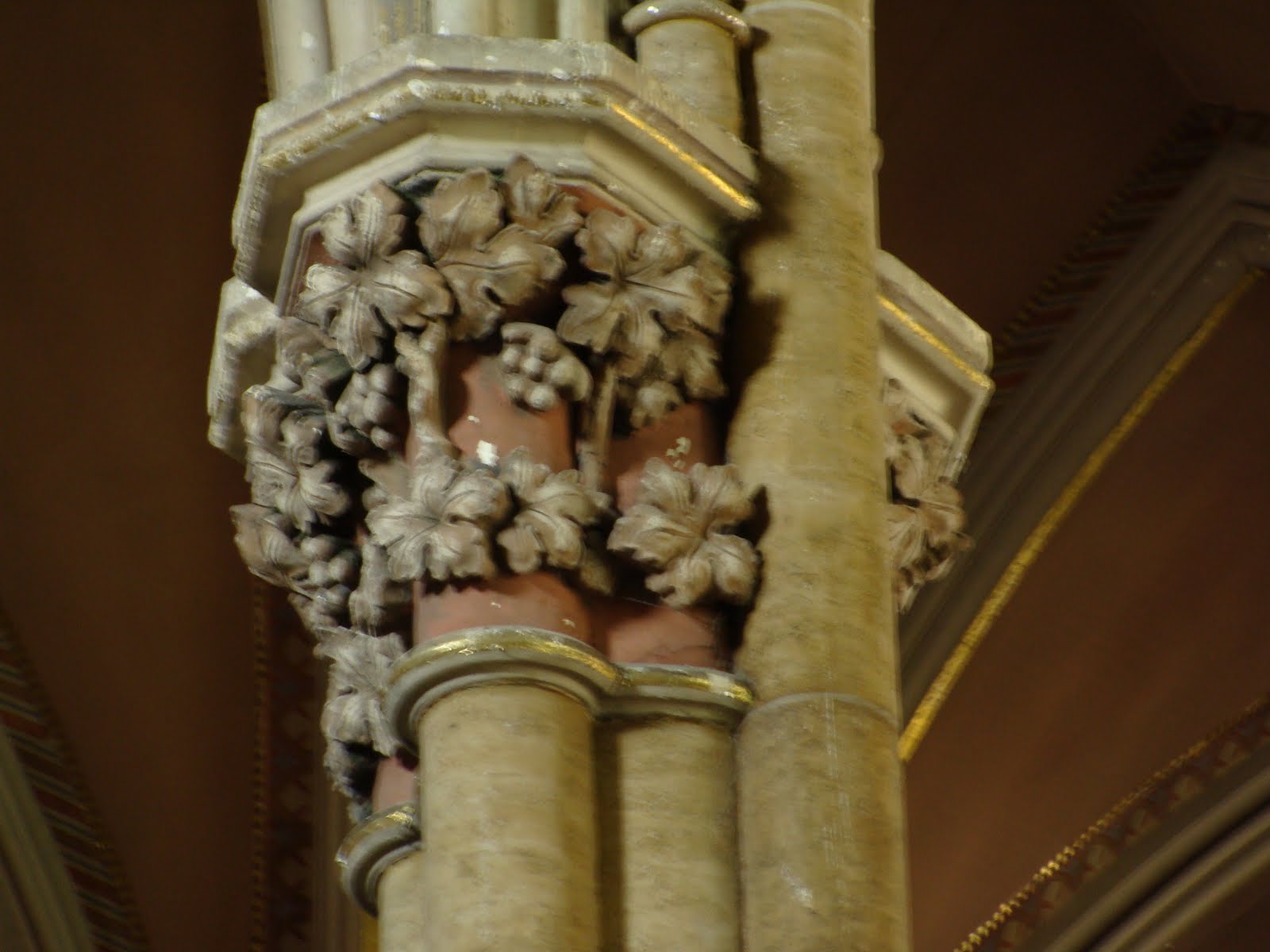
The complex, foliated designs on the capitals of the columns are also unique, and still possess their original paint.
Surrounding the front door are thick brick walls, supporting the tall spire above.
The owners are looking for help or a possible buyer for the church. If you have a good idea, and some money, you should help out.

Sunday, May 6, 2012

The Sun Sets on Crestwood Mall

I stopped by the Crestwood Sears last Thursday, looking for some good going-out-of-business-sale deals. I found the store just about completely stripped of all of its merchandise. I spent a lot of time at Crestwood Mall in the early 1990's, and it honestly pains me to see it close for good. Examining the Sears merchandise, I saw no problems in quality, nor in price. It just seems like shopping habits of St. Louis had passed Crestwood Mall by. I found myself coming to the Sears closing sale several times over the last two months; while I never shopped at the store when I had hung out at the mall, I felt a sense of sad duty to come and visit my old friend on its deathbed. I knew I could do nothing to save it, but I felt like I had to come by to say goodbye. The most depressing aspect was watching the employees drag themselves through their shifts, knowing that they would soon be out of a job, and perhaps for a long time. It's just sad to see this.

Saturday, May 5, 2012

Italianate Farmhouse, Wildwood

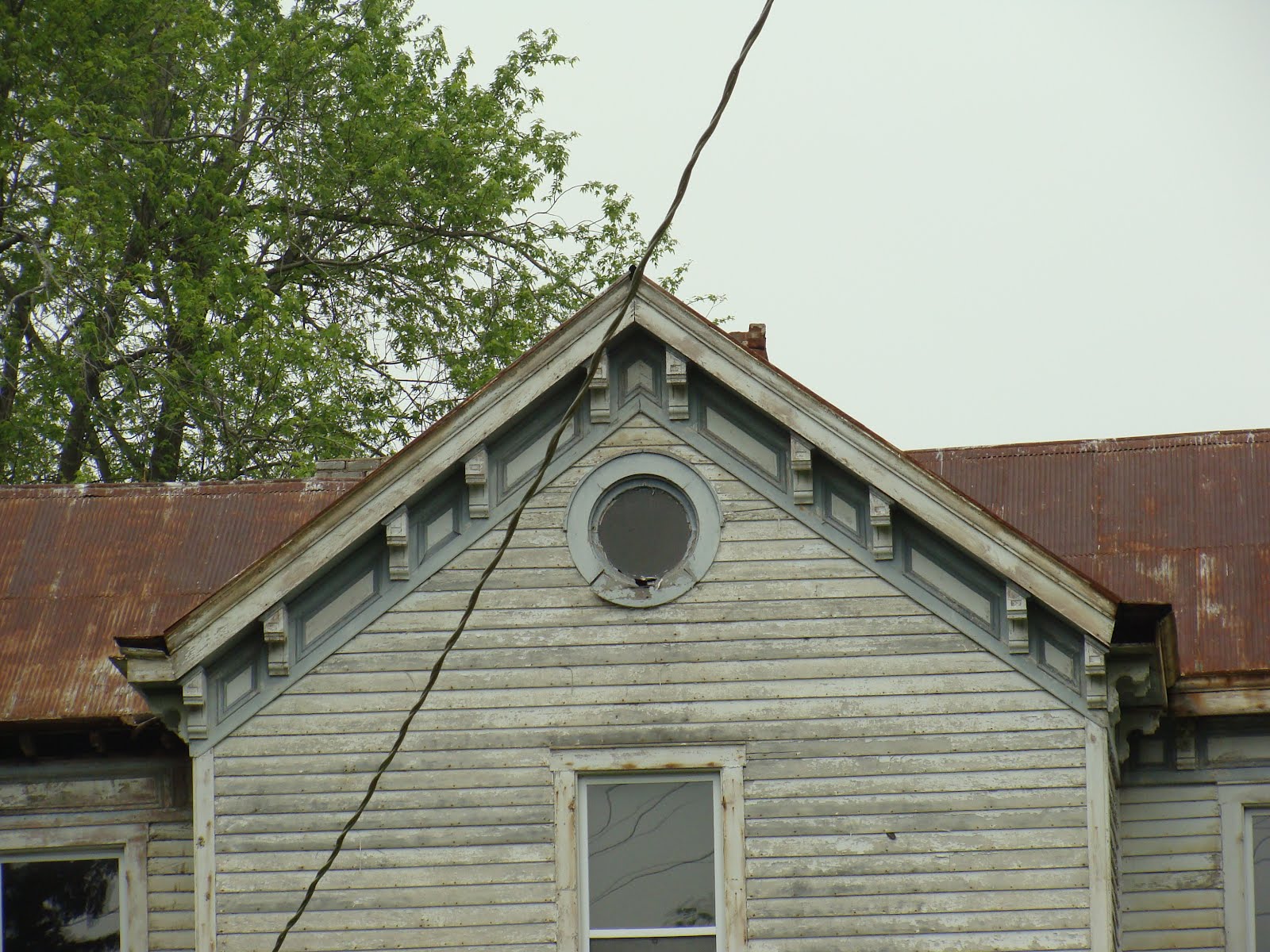
Just east of Pond is this rustic, but beautiful Italianate farmhouse. The paint is faded, but the intricate details remain. Will someone save it before it is demolished? I hope so.

Friday, May 4, 2012

Big Chief Roadhouse, Pond, Wildwood

Pond was long a good place to stop for travelers heading west from St. Louis. While the earlier Pond Hotel served the travelers of the 19th Century, the Big Chief Hotel provided more elaborate lodgings for the new automobile travelers passing through the area.
Spanish Colonial Revival in style, which is obviously not native to Missouri, the hotel predicted the oftentimes unique and eccentric hotels lining the original Route 66.

Thursday, May 3, 2012

Pond, Wildwood

Further down Manchester Road to the west, Pond actually has houses that are much older than its neighbor Grover.
In particular, this double house right at the corner is a great example. It's a cool house, in bad shape, and is currently sitting vacant. What is the story behind this house?
There also is a gas station from what looks like the 1920's, which is now some sort of business.
The old house on the corner was a French restaurant a few years ago, but now it sits empty. It's an interesting house, but like the rest of Pond, is made of wood and lack of maintenance is taking its toll.
The general store, now closed, is actually built in front of an older house, perhaps as an expansion of the original, smaller house.
Updated: Thanks to Lynn Josse, I have learned more about the long, dilapidated building pictured above; it was the Pond Hotel, and you can read about its plight here.


Wednesday, May 2, 2012

Grover, Wildwood

Grover is a small hamlet out old Route 66--the first route--more commonly known as Manchester Road.
There are still a fair number of houses left, including these two very old and rustic cottages, as well as a couple of businesses.
Thankfully, when Highway 100 was rerouted, it spared the town and its nearby western neighbor of Pond.
Time has passed by this town, though there are plans for more development in the town.

Tuesday, May 1, 2012

Glencoe, Wildwood

Down the narrow, tree lined roads of Wildwood, in far western St. Louis County, are numerous small unincorporated towns, now part of the largest city by square mileage in the region.
Glencoe was one such small town, focused on the mining and lime industries now contained within Rockwood Reservation along the Meramec River. At one time it was a bustling town, with a school, general store and church.
Floods in the late 1990's wiped out much of the town near the river, but many houses still survive further up the hill.
Like many of the small towns in this part of the county, Glencoe once had a much larger population, but as the railroad ended its stops in the town, it shrank into the small hamlet that it is today.
Read about the town here.

A Blog detailing the beauty of St. Louis architecture and the buildup of residue-or character-that accumulates over the course of time.