Thursday, March 15, 2012

Benton Park

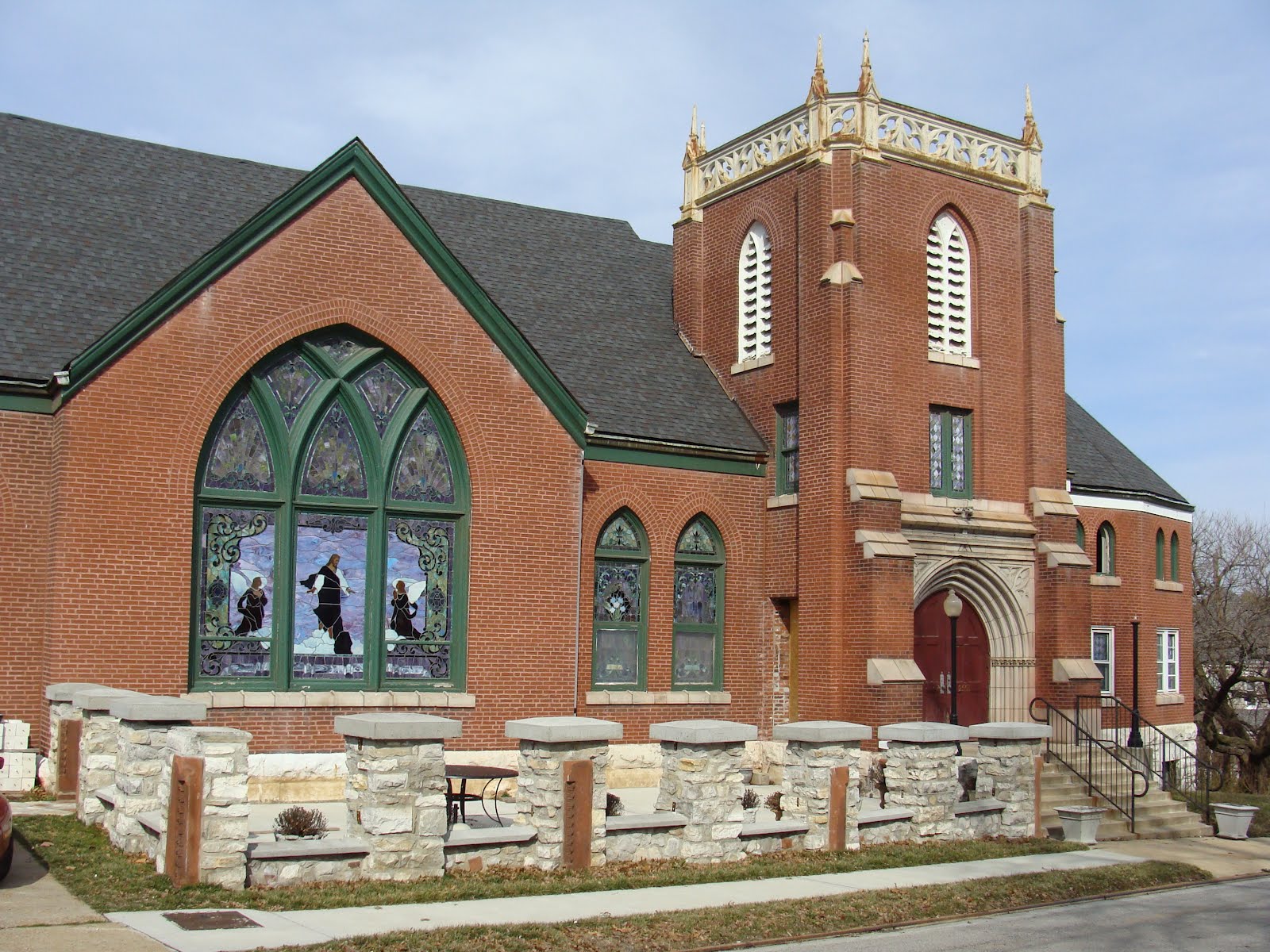
The setting of Benton Park is one of the most beautiful in the city, with intact streets surrounding it on all sides except for Jefferson on the west.
Set as a typical Victorian park, with long winding trails that snake around the park, it was designed for strolls, and not as a formal space.
Interestingly, I just learned the massive and well-preserved English Cave complex is still hidden deep under much of the park.
Preserved because the park never massive development, it was sealed in the Twentieth Century, but there may still be entrances in some of the houses in the area.
As can be seen from the high point in the park, which commands stunning views over the area, the nearby Lemp Brewery took advantage of its own branch of caves under South City.
Oh, and there's this obelisk, dedicated to some German guy. It sits resplendently alone, on top of the ridge of a hill on the south side of the park.

Wednesday, March 14, 2012

Landmarks of South County?

The editor of B.E.L.T. and I were recently discussing our lack of knowledge of major architectural landmarks in South County. Specifically, any great churches, relatively intact main streets or other noteworthy houses or businesses? We'd like to hear from you. By the way, I was knocked out with the flu the last couple of days, but I'm back to normal now.

Sunday, March 11, 2012

New North St. Louis and Further Afield Pages

I've begun to create pages for the major sections of my blog, and you can find them at the top of the blog. My first two pages, on North St. Louis and Further Afield, will one day be complemented by pages by the others. The North St. Louis page, for example, will allow you to immediately see what neighborhoods are in North City, as well as locating it one the map.

Saturday, March 10, 2012

Last Remaining Gasometer

Once one of four gasometers built in the St. Louis area, it is now the last one, clinging to life in splendid isolation on Natural Bridge Avenue.

Friday, March 9, 2012

The Ville #2

The Ville and Greater Ville, which I've compressed into just simply The Ville, was once the center of the African-American middle class in St. Louis.
I went back to the area last weekend to look around and check up on things; mostly nothing was different, though sadly many more buildings seem to have fallen vacant or worse since the time I visited two years ago.
I find the housing stock outside of Grand Blvd to be an interesting counterpoint to the Second Empire and Italianate so prevalent east of that major street.
I followed St. Louis Avenue, like last time, and I always get a kick out of the fact that the street is really a cobbling together of earlier streets of subdivisions that didn't match up.
So there are all of these strange curves where traffic engineers attempted to smooth out the dog legs in the street.
This burn-out is sadly too common of a feature in the area; while brick theft has come to The Ville, there obviously would be no motivation to burn a wooden house to harvest the bricks. Perhaps it was just a short circuit.
I caught this view of the skyscrapers downtown as I proceeded past a break in the street wall. The conclusion if obvious: why isn't land so close to downtown more valuable?

Thursday, March 8, 2012

Wells-Goodfellow #2

I visited the Wells-Goodfellow neighborhood several years ago, focusing on St. Louis Avenue. I returned and while I tried to retrace my steps, I saw many new things.
I know that for many people, the neighborhood represents everything that is wrong with St. Louis, and dismissively refer to it as the "ghetto," but I want to be more idealistic.
Yes, it's disturbing to see just how badly this portion of the city has fallen, and much of the area looks semi-rural due to abandonment, which is what the neighborhood was for much of its history.
What remains is just as beautiful of any area of the city west of Kingshighway, but just a little rough around the edges.
I hope to get back soon and explore this varied and interesting area more.

Wednesday, March 7, 2012

Borderlands, Skinker Parkway and Kienlen Avenue

Most St. Louisans have driven Skinker between Highway 40 and Delmar, but it continues on for several more miles and changes its name to Kienlen Avenue, skirting the border of the city and county.
What is surprising is the large number of relatively recent, if certainly bombed-out apartment complexes lining the street.
The area, long rural throughout St. Louis's history, has a distinctive suburban quality to it. It doesn't seem like a great place to live without a car, but it seems many of the residents rely on public transit.
There is still a lot of activity, as this seafood restaurant in a former Church's Chicken(?) attests. It might not always be pretty, but it is certainly still alive.

Tuesday, March 6, 2012

Crestwood Interior, Revisited

We proceeded inside of the mall, and were met with abject abandonment. One rumor says the stores were all forced to close on March 1st, but I don't know if that's true or not. Thinking back, I was afraid of photographing the interior of the mall out of fear of the Leprechauns, but you could probably scream at the top of your lungs nowadays and no one would care.
I always found the Dillard's wing to be the most interesting architecturally, in all of of its 1960's modernism, but I was sad to see that the old wing has really started to deteriorate. Pretty much every skylight showed evidence of water damage, and I've heard rumors that the whole parking substructure underneath this section is unstable.
Remember when there was just that skinny little bridge over to the old strip mall portion of the complex? Sometime in the early 2000's it was apparently widened, which seems silly considering it is now all abandoned.
The western end of the mall was never very interesting to me, and it was formless, uninviting and lacking in any real character.
And don't get me started on that pit of a food court; over the decades the names changed every five to seven years, until it died a peaceful death finally as "Food Terrace." Greasy Pit of Hell might have been more appropriate.

Monday, March 5, 2012

Crestwood Revisited, Exterior

I went back with my parents to Crestwood Mall to check out the going out of business sale at the last remaining anchor at the mall, Sears. Scroll down and read about the development of the mall here.
Originally part of the strip mall before it was expanded and enclosed in the 1980's, Sears still has its original escalators. It's still surprising that Crestwood Mall is just about empty, until one factors in the major improvements and renovations to other nearby, competitor malls such as West County and South County Malls.
It has been five years since the last time I photographed the mall, and little has changed, except there are more cracks in the parking lot pavement. One thing I noticed on this trip was the sheer massiveness of the Dillard's store, which closed several years ago. I could have sworn the front portico looked different in the past.
I assume it was originally built as a Stix, Baer and Fuller, and I also wonder if this was intended to be its suburban anchor. The white brick facade is truly amazing, and provides a real presence compared to the ugly and low slung Sears and Famous Barr/Macy's. It also had a small covered corridor that was attached to the renovated portion in the 1980's. It is interesting architecturally, with its outward facing stores and second floor.
The massive parking garage underneath seems to be largely blocked off now.

Sunday, March 4, 2012

Alswel, Revisited

A reader snapped an up close picture of Alswel recently while visiting a friend in the neighborhood. It's looking good after all of these years.

Photo by Joanne Owens

Saturday, March 3, 2012

Incline Bricks, Clifton Heights

I saw these bricks on a steeply inclined street in Clifton Heights, and I realized they have little treads in them, no doubt to give traction for vehicles. Very unique, and I have never seen them before.

Friday, March 2, 2012

Clifton Heights Houses

The wide variety of housing stock in the Clifton Heights neighborhood is fascinating, particularly because so many houses are built of wood, and not brick or stone.
The houses look like something you would see in Kirkwood or Webster Groves, with large lots and even original garages behind many of the houses.
My favorite house is the lone red brick house in the immediate area, with its distinctive square turret.
The green on this houses's siding really makes the house pop out from the white and blue houses around it.
Is this the doll house everyone has been talking about?

Thursday, March 1, 2012

Clifton Heights Streetscapes

The gently curving streets of Clifton Heights offer a panorama of vistas as one walks down its streets.
While walking past some houses, you might see a break in the trees and glimpse Barnes Hospital off in the distance.Below, a couple of gingerbread houses have crept into the neighborhood, adding another dimension of architectural style.
The wide variety of housing stock, from different generations certainly adds to the character of the neighborhood, including a wide variety of sizes, as this street of bungalows attest.
This church, wedged in between two streets, is a great example of the walkable church, where the people on surrounding streets would attend.
I love how the red brick stands out from the clapboards of the nearby houses.

A Blog detailing the beauty of St. Louis architecture and the buildup of residue-or character-that accumulates over the course of time.