
The interior of the Nelson-Atkins is spectacular; I like how the interior has its original decorative scheme, particularly the marble walls in many of the galleries.


 The Tazewell County Courthouse is a fantastic example of Beaux-Arts architecture in the early Twentieth Century, and is also listed on the National Register.
 The building was designed by the firm of Deal & Ginzel, a partnership between John Deal, an experienced builder turned architect, and the more classically trained architect Roland Ginzel.
 The firm built numerous public buildings throughout central Illinois, including courthouses and high schools.
 I love the detailing on this building, including the huge, ornate, almost baroque entrances on all four sides of the building.
 It's a stern building, without any frivolity or even a dome like so many courthouses in the Midwest, but it makes for a powerful presence in the middle of downtown Pekin.
 Built in stages, the Bell Telephone Exchange, or AT&T, depending on how you look at, is an interesting example of early 20th Century utility architecture.
 Showing the influence of the Beaux-Arts style, this building could have easily just been a giant brick box.
 But clearly its builders believed that people deserved better than that, and this building is much more ornate than it needs to be functional. I love the two telephone booths that still stand inside the fence.
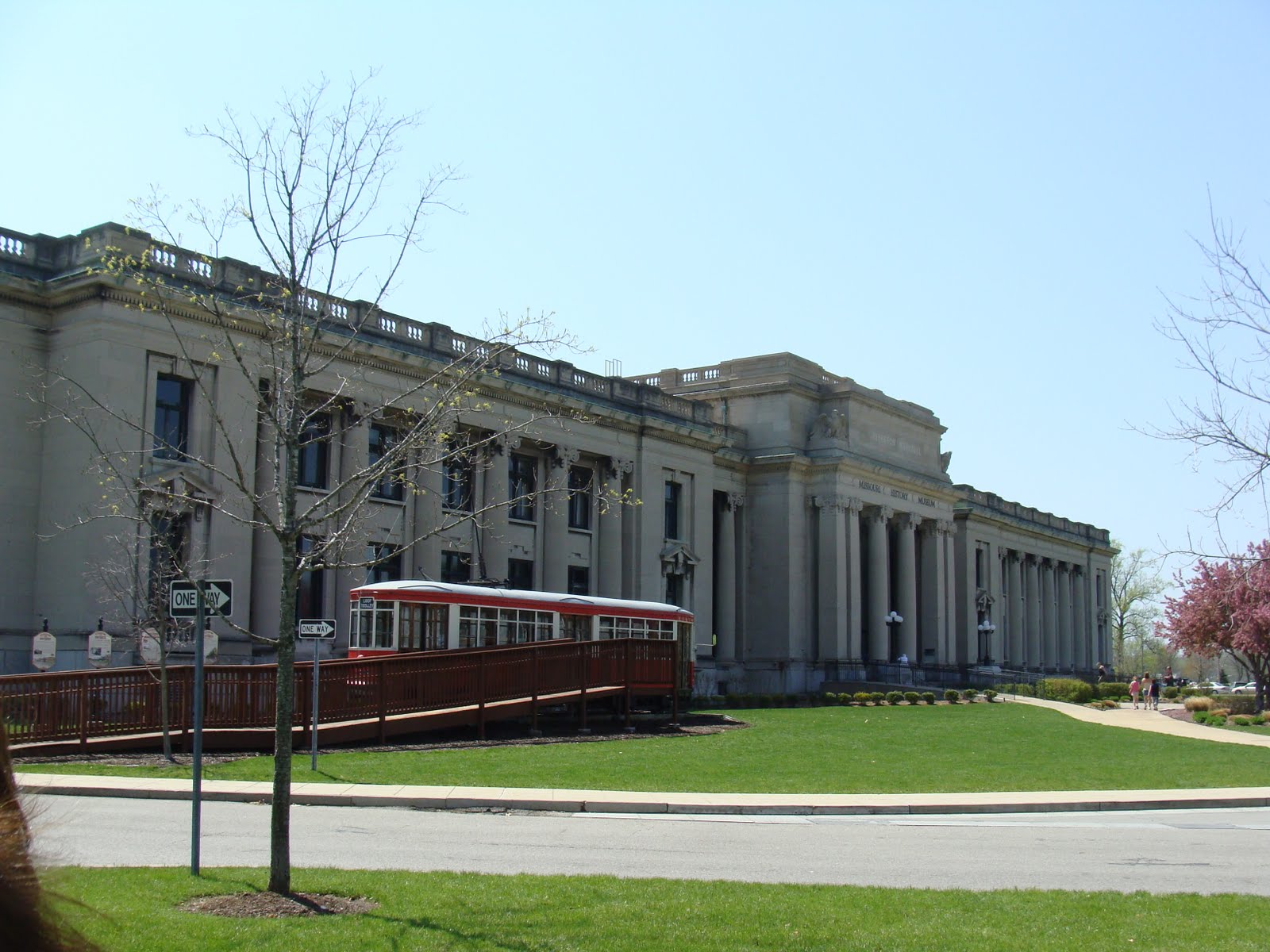 The History Museum is still a great building, even if it has the awful addition out the back that obscures its back facade.
 Enclosed since at least the earl 1980's, the main hall is a great public space.
 Lewis Place is an incredible street, lined with a wide variety of housing stock, from mansions to bungalows.
 I will talk more in the future about the street, which recently suffered damage from a tornado.
 The interior of the Cotton Belt is sparse, but not without its uses. The owner recently gave permission for an art happening to occur within its confines, to great success.


 I realized when I came back later in the day and photographed the Cotton Belt at sunset, that what appears to be a very simple, unornamented building is actually a very complex, and richly decorated building, if you look in the right places.
 First of all, the gentle curve at the top of the parapet wall is clearly reminiscent of Egyptian architecture, as subtle as it is.
 The most exciting part, however, is the elaborate Beaux-Arts decoration around the office portion of the building.
 The terracotta sign, identifying the building, is a beautiful shade of green, only partially ruined by a graffitist.
 The door is a true gem, looking as splendid as the door to any bank built about the same time.
 Above the doorway is another shield, ornamented with the bounty brought into the depot.
 The small detail of the bay window, presumably for the foreman's office, is a nice touch, and one not immediately noticeable from up close.
 The bricks of the loading yards are still there, slowly being choked by weeds, some of which are actually quite beautiful. When I was there, wildflowers of all different colors had sprouted throughout the depot yards.
 Tomorrow, we will go inside the slender building and look at its interior.Here is the location from satellite images.


